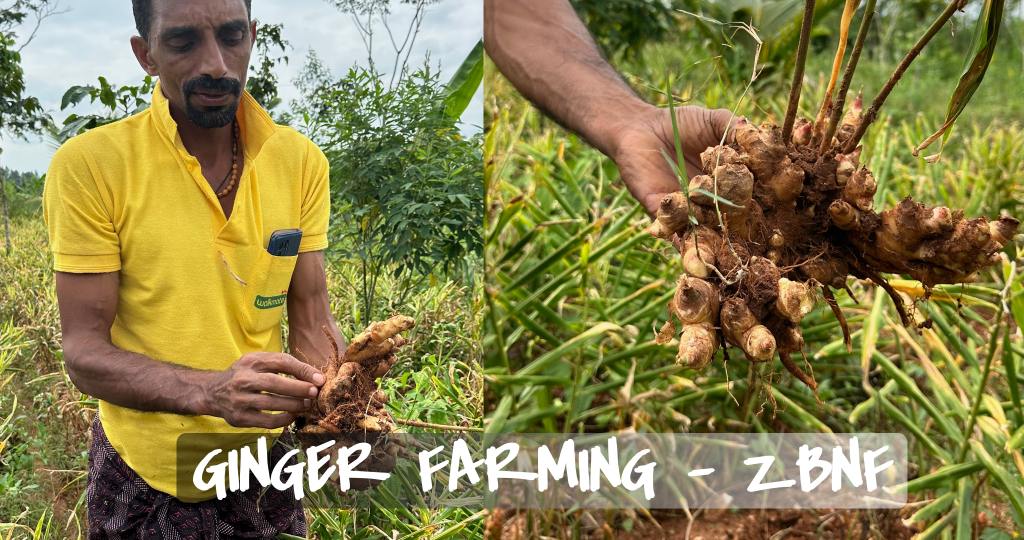
Ginger (Zingiber officinale) is one of the most valuable spice crops in India, widely used in kitchens, medicine, and exports. While conventional farming relies heavily on chemical inputs, Zero Budget Natural Farming (ZBNF) offers a healthier, sustainable, and cost-effective alternative.
In this blog, we’ll explore how to cultivate ginger using ZBNF methods—ideal for small farmers, backyard growers, and natural farming enthusiasts.
🌿 What is Zero Budget Natural Farming?
ZBNF, pioneered by Subhash Palekar, is a natural farming method that eliminates external chemical inputs and focuses on farm-made bio-inputs like:
- Jeevamrut (cow dung + cow urine + jaggery + gram flour)
- Beejamrut (for seed treatment)
- Mulching and intercropping
- No tilling, no synthetic fertilizers, no pesticides
🌧️ Why Grow Ginger in Monsoon?
- Ginger thrives in warm, humid climates with well-drained soil.
- Monsoon (June–August) provides ample moisture for sprouting.
- The crop matures in 8–10 months, ideal for seasonal rotation.
🧑🌾 Step-by-Step Ginger Cultivation in ZBNF
1. 🌱 Land Preparation
- Choose loamy or sandy soil with good drainage.
- Prepare raised beds:
- 1 meter wide, 25–30 cm high
- 30 cm spacing between beds
Natural Inputs to Add:
- Cow dung manure or compost
- Ghana Jeevamrut
- Wood ash (optional, for pH balance)
Cover beds with dry leaves or mulch to retain moisture and suppress weeds.
2. 🧄 Seed (Rhizome) Preparation
- Choose disease-free ginger rhizomes with 2–3 buds.
- Cut into 20–25 g pieces.
- Soak in:
- Beejamrut
- or cow urine + water (+ optional Trichoderma)
- Dry under shade for 2–3 hours before planting.
3. 🌿 Planting
- Plant 5–6 cm deep.
- Keep 25–30 cm spacing between plants.
- Add mulch on top to preserve soil moisture.
4. 💧 Watering and Maintenance
- Water every 3–4 days or as needed (based on rainfall).
- Apply Jeevamrut every 15 days.
- Reapply mulch regularly.
- Weed manually—avoid tilling or disturbing soil.
5. 🐛 Natural Pest & Disease Management
| Problem | ZBNF Remedy |
|---|---|
| Fungal rot | Trichoderma + compost near root zone |
| Aphids, mites | Agniastra spray (fermented garlic + chili + cow urine) |
| Leaf spot | Neem oil + sour buttermilk |
| Termites/ants | Wood ash around plant base |
6. ⏳ Harvesting
- Young ginger: 5–6 months
- Mature ginger: 8–10 months
- Gently dig without damaging rhizomes.
- Clean and dry in shade before storing or selling.
📊 Cost & Profit – The ZBNF Advantage
| Input | Approx. Cost |
|---|---|
| Seed rhizomes | ₹8,000–₹12,000/acre |
| Natural inputs (ZBNF) | Very low (farm-made) |
| Yield | 8–12 tons/acre |
| Organic market price | ₹40–₹60/kg |
💡 High profit with low input = sustainable success.
🌍 Benefits of Natural Ginger Farming
- Builds soil fertility
- Reduces chemical dependency
- Improves climate resilience
- Generates premium value in markets
✅ Final Thoughts
Ginger farming using ZBNF is an excellent way to grow sustainably, protect your soil, and earn better profits—without relying on chemicals.
Start small, observe your soil and weather, and adapt as you grow. Natural farming is a journey that rewards both the earth and the farmer.
📣 Got Questions?
Drop them in the comments or subscribe to our YouTube channel for more videos on natural farming.
Check out our vlog on Ginger Farming


 Kris Food Forest
Leave a comment